Stockade Feeding Systems’ principle product range is hay feeding products specifically designed as a tool for the sustainable management of livestock on small acreage.
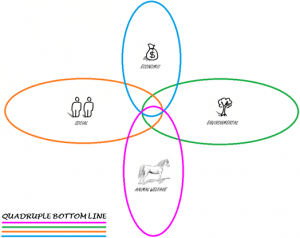
However, we’re taking the “triple bottom line” concept of sustainability to the next level by incorporating animal health and welfare benefits, providing “quadruple bottom line” benefits. Such benefits include:
Social
- Improved time management
- No need to feed twice a day, or even each day depending on the number of animals and feeders being utilized
- Less need to manage paddock bullies
- No need to double handle the hay (storage, transport, feed, return transport vessel to shed), just load and drop until all the hay is consumed
- Easily handled by one or two people
- No need to wait for horses to finish a meal before they can be ridden
Environmental
- Less soil compaction/erosion – move it around and between paddocks, or keep returning it to your designated sacrifice area
- Reduced hay contamination with soil and manure
- Promotes a more natural feeding pattern
- Less time available to pace, causing erosion and weight loss
- Less time available to ring-bark trees through boredom, causing tree fatalities and interfering with stock digestion
Economic
- Reduced hay wastage
- One off financial outlay with a short buyback period
- Reduced vet bills through an improved (more natural) digestion
- Less need to feed processed (hard) feeds
- Allows land holders to better utilize the more cost-effective large bales rather than expensive small bales (Trailer and Trolley)
- No need to purchase and maintain a tractor or forklift to move large bales (Trailer and Trolley)
Animal Health and Welfare
- Cleaner hay resulting in reduced mud, dust and parasite consumption
- Less chance of developing conditions such as colic, ulcers, laminitis, founder, and other ailments
- Promotes a more natural digestive process in which the stock self-regulate consumption, rather than gorging
- Behaviour enrichment to aid in preventing the development of stereotypies
- Less time available to pace, causing erosion and weight loss
- Less time available to ring-bark trees, interfering with animal digestion
- Mobility means that in wet periods the stock don’t have to stand in wet patches that potentially cause greasy heel
- Paddock bullies have less time available to aggravate paddock mates
- Made from a durable material so it can’t be easily broken
- Allows the stock to feed with their head down, in line with natural physiology, creating even pressure on the teeth and allowing the jaw bone to move freely in all directions
- Flexible net is less likely to damage stock teeth than a metal mesh, and yet rigid enough that if it were to fall out or an animal were to place a hoof in the bin it is unlikely to get caught
- Net prevents animals from embedding their heads in hay, resulting in cleaner coats/wool and less chance of eye and ear irritation
- Allows animals to be managed as a herd and therefore to gain and maintain social skills and prevent isolation/nervous behaviors